
The main distinction is collateral: a secured card requires a security deposit, while an unsecured card does not. Both are borrowing accounts with repayment obligations. “Unsecured” does not mean free of fees, and “secured” does not mean the monthly bill is already paid.
Compare the same five questions
| Question | Secured account | Unsecured account |
|---|---|---|
| Opening collateral | Deposit required | No security deposit |
| Monthly repayment | Required under agreement | Required under agreement |
| Cost | Check fees and APR | Check fees and APR |
| Eligibility | Issuer-specific | Issuer-specific |
| Credit reporting | Confirm with issuer | Confirm with issuer |
Separate a cost from cash you cannot currently use
Consider two made-up offers. Card A has a $200 refundable deposit and a $0 annual fee. Card B has no deposit but a $75 annual fee. Ignoring interest and other charges, A ties up $200 while B costs $75 for the first year. Those are different effects on your budget.
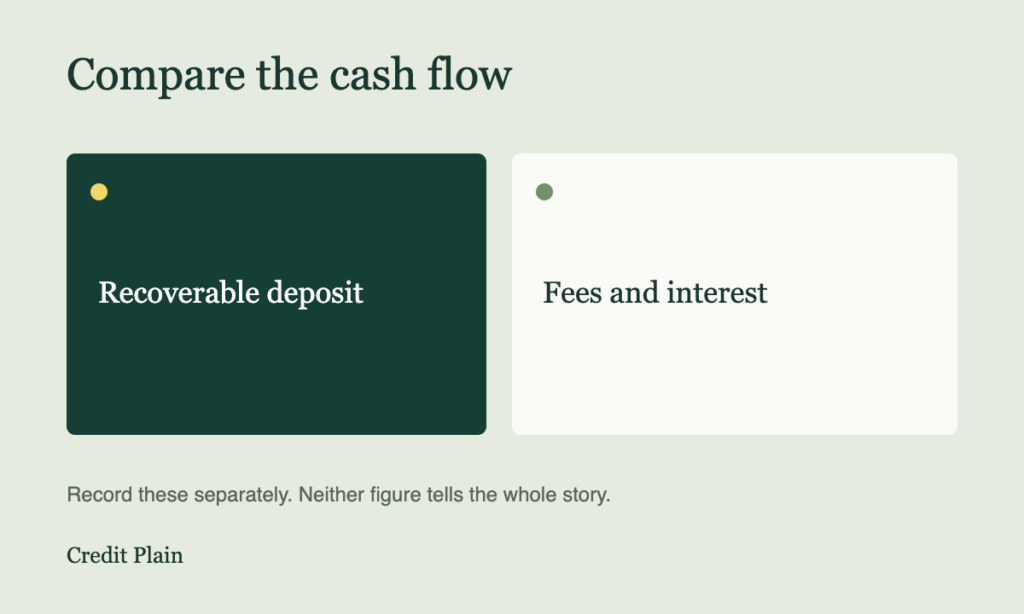
This does not make either imaginary card automatically better. If $200 is needed for your next rent payment, tying it up matters. If the fee repeats every year, the ongoing expense matters. Write down both figures rather than combining them into one misleading “cost.”
Do not assume a label tells you who qualifies
Read the issuer’s eligibility information. Compare deposit requirements, fees, reporting and account-management features together. A rewards headline should not obscure the bill you will need to pay.
Build a short comparison note
For each real offer, record the date, official application page, pricing disclosure, cash required and refund terms. Leave any unanswered item blank until verified. You do not need a ranking with five stars to make a useful comparison.
Next, work through our comparison worksheet or return to how a secured card works.
Sources and context
Sources checked October 23, 2026. Examples are hypothetical. This educational prototype uses AI-assisted drafting and has not received independent financial expert review.